Research projects

Filters (&&)
Experiencing and Experimenting: Embodied Causal Learning

Experiencing and Experimenting: Embodied Causal Learning

Julia Chatain, Liz Lapidow, Fan Wang, Rudolf Varga

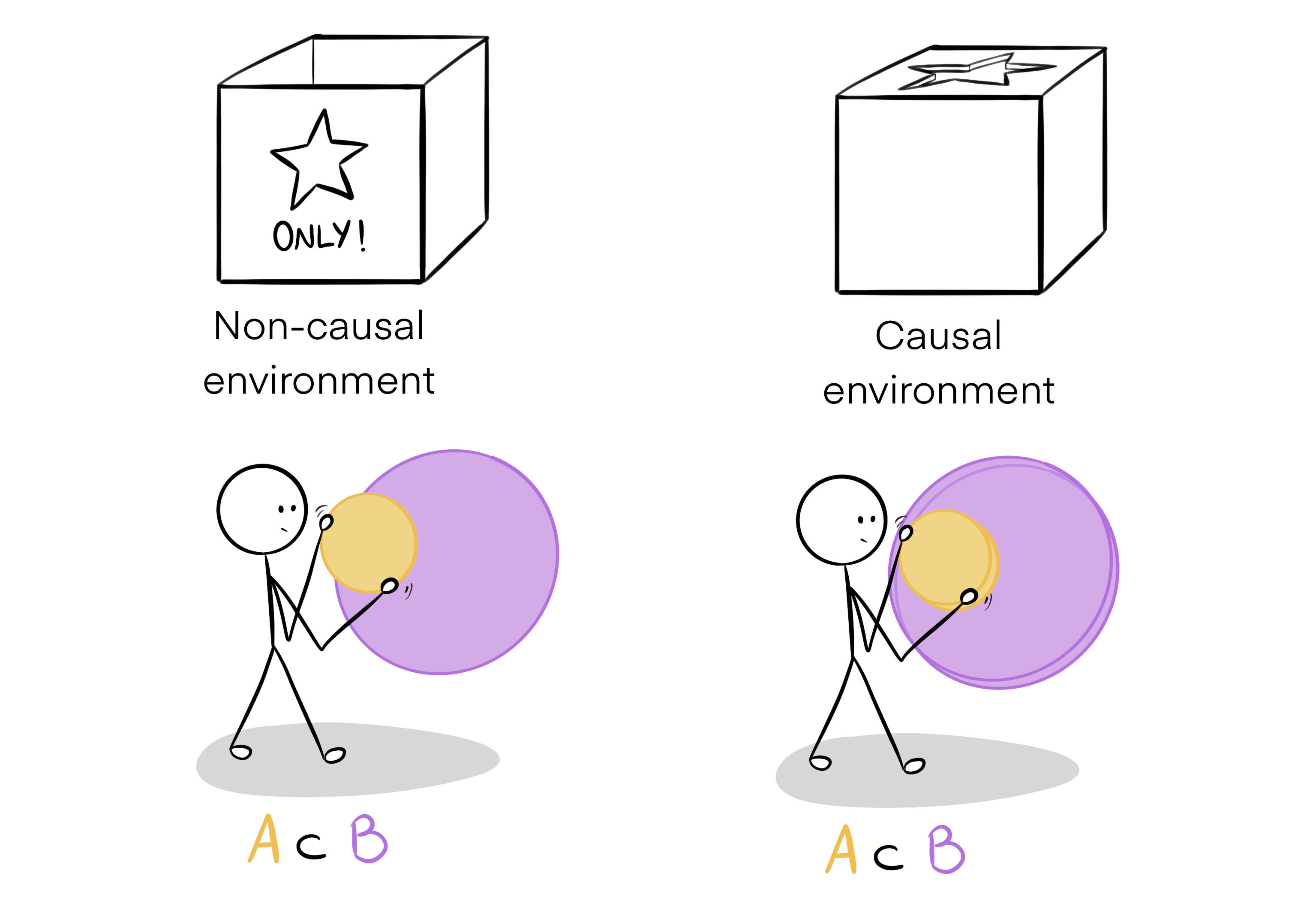
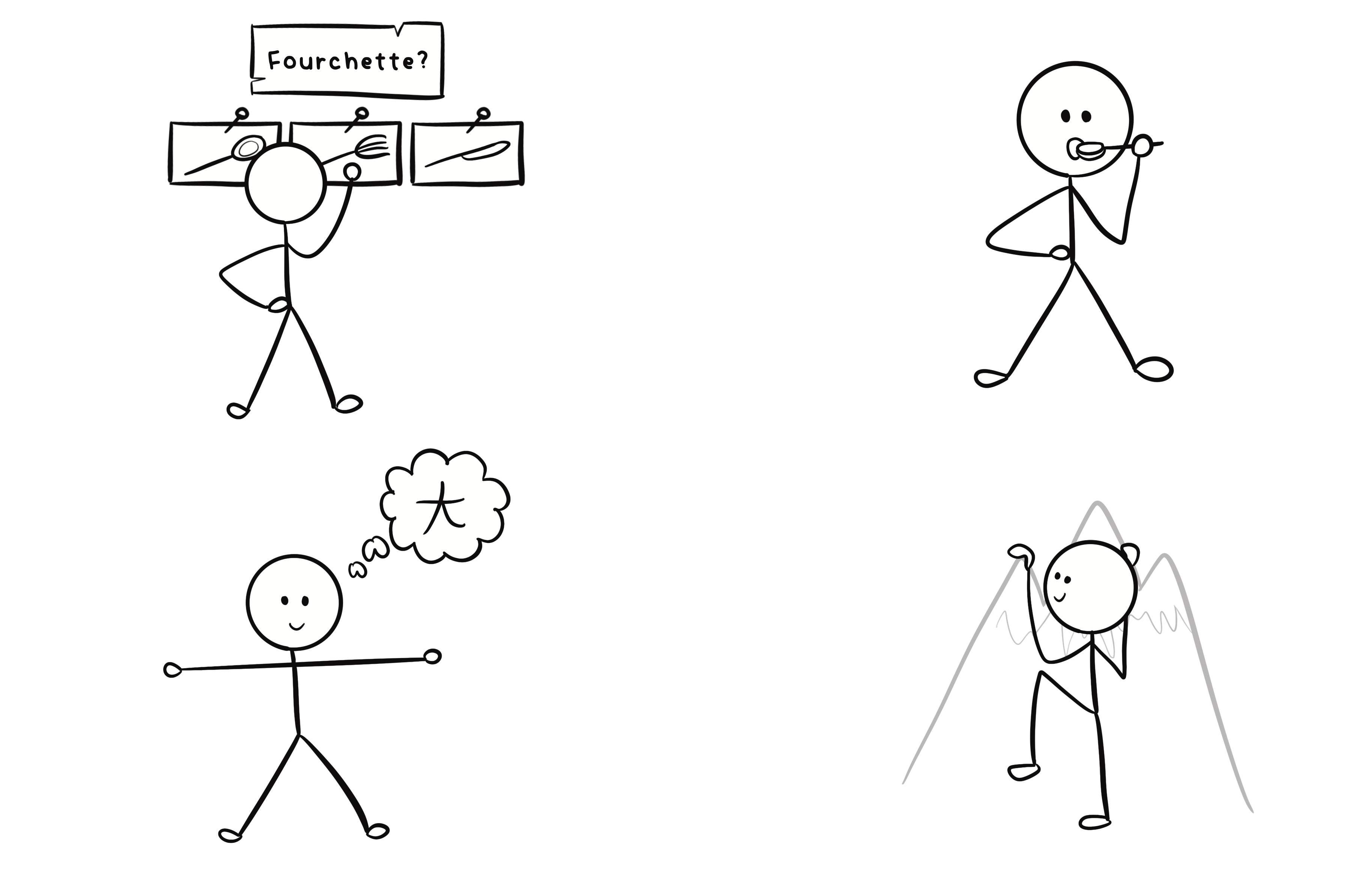
When representing mathematical objects as physical objects to support embodied learning, one aspect is often ignored: As humans, we are used to learning through experimentation with physical objects. In this project, we explore how we can design interventions to support both embodied and causal learning.

embodied learning embodied interaction causal learning mathematics education multi-modal learning
A taxonomy of concreteness and abstraction in mathematics

A Taxonomy of Concreteness and Abstraction in Mathematics

Julia Chatain, Charlotte H. Müller, Keny Chatain, Leon Calabrese, Manu Kapur

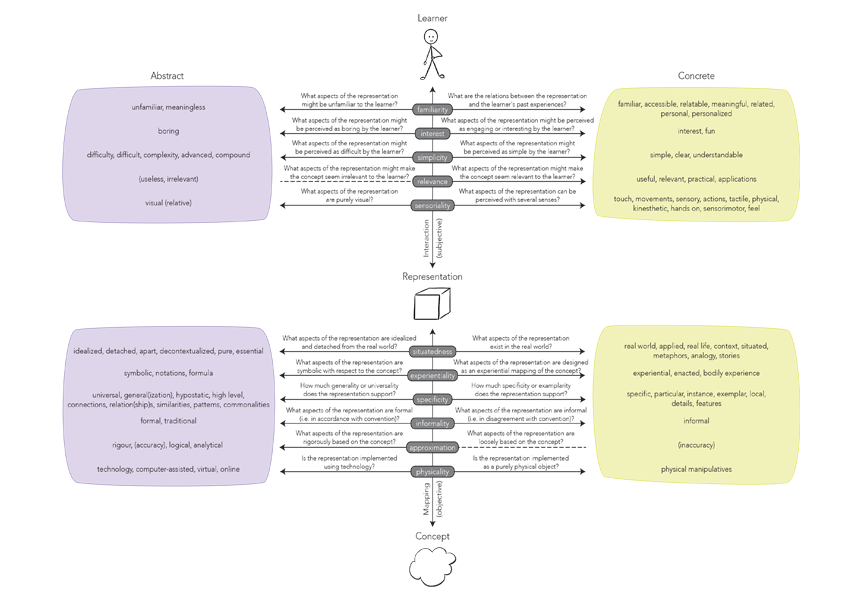
Concreteness and abstraction are key in mathematics education, but it is not always clear what these terms exactly mean. For example, "concrete" can mean specific, relatable, visual, tangible, while "abstract" can mean general, rigorous, vague, symbolic. In this project, we make the inventory of the meanings of concrete and abstract in mathematics education, and present a taxonomy of this semantic space.

mathematics education concreteness abstraction verbal disputes taxonomy
How do learners move: directed and spontaneous actions

How Do Learners Move? Directed and Spontaneous Actions

Julia Chatain, Venera Gashaj, Bibin Muttappillil, Robert W. Sumner, Manu Kapur

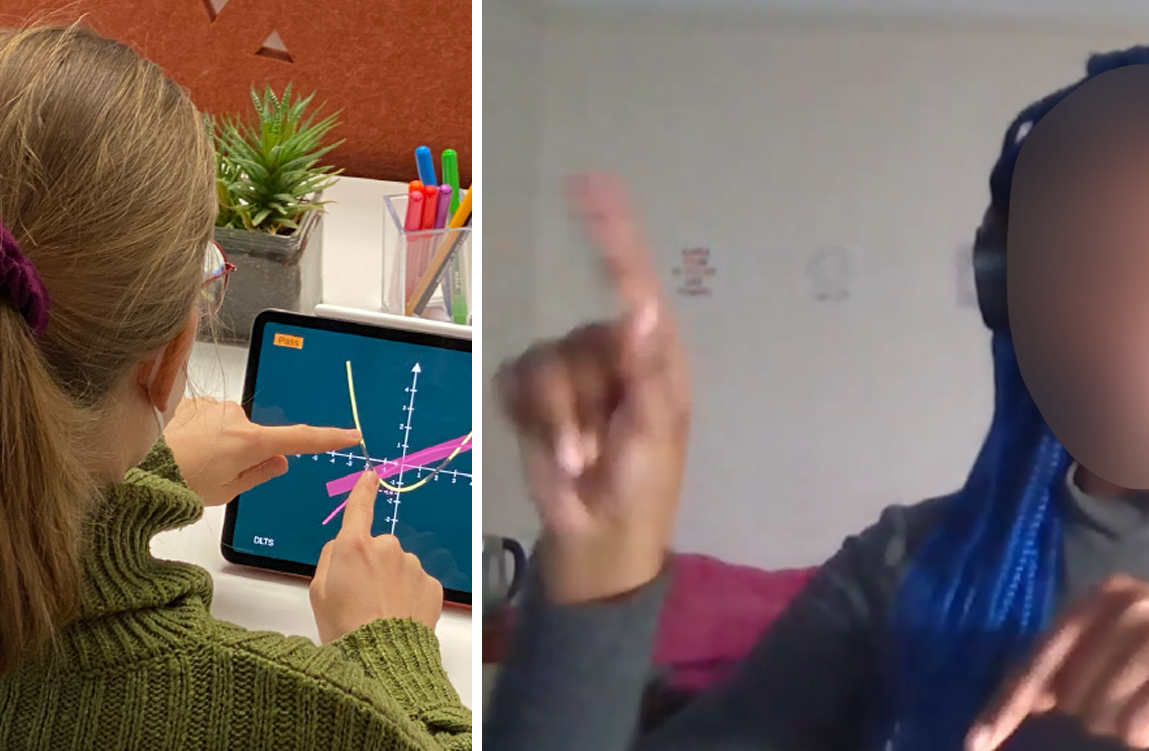
We argue that both directed and spontaneous bodily actions should be considered when designing embodied learning activities, and explore such bodily actions through two studies. We then propose design considerations for embodied learning interventions for mathematics.

embodied interaction embodied cognition embodiment mathematics education VR PS-I
What is embodiment? Landscape for VR embodied learning

What Is Embodiment? Landscape for VR Embodied Learning

Julia Chatain, Manu Kapur, Robert W. Sumner

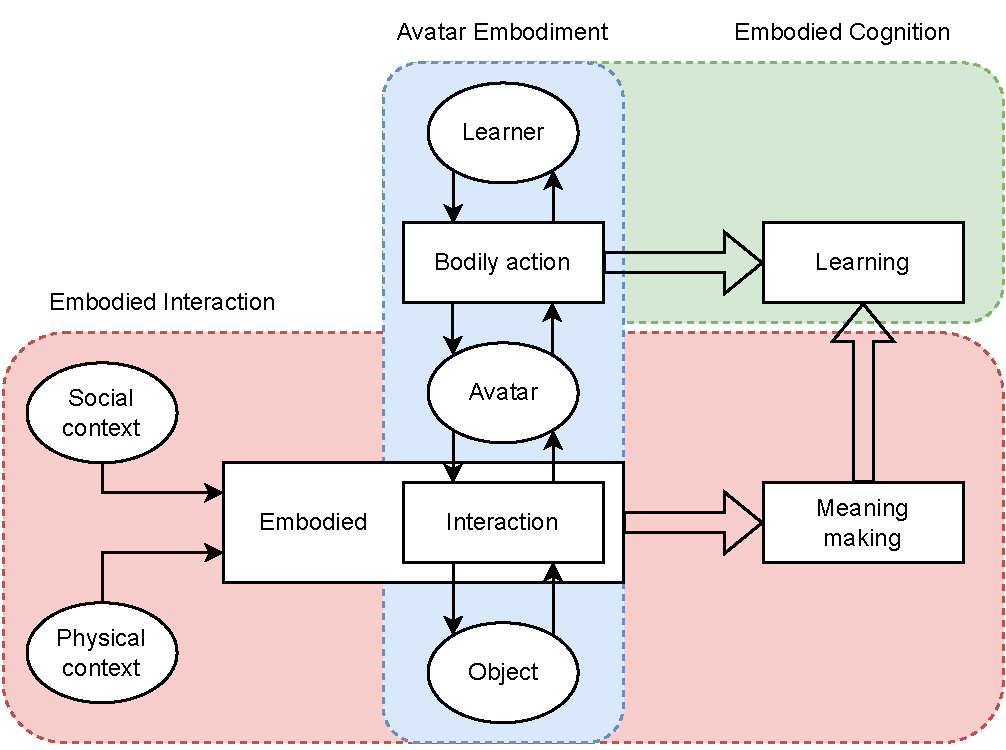
While we now have a good understanding that we should consider our bodies in learning, teaching, and interacting, it is still unclear what matters when. In particular, the term embodiment has different meanings in different fields: embodied cognition, embodied interaction, or avatar embodiment. We propose an articulation of these definitions and present opportunities for design.

embodied learning embodied cognition embodied interaction avatar embodiment VR
Concrete or Embodied? Graph theory in VR

Concrete or Embodied? Graph Theory in VR

Julia Chatain, Rudolf Varga, Violaine Fayolle, Manu Kapur, Robert W. Sumner

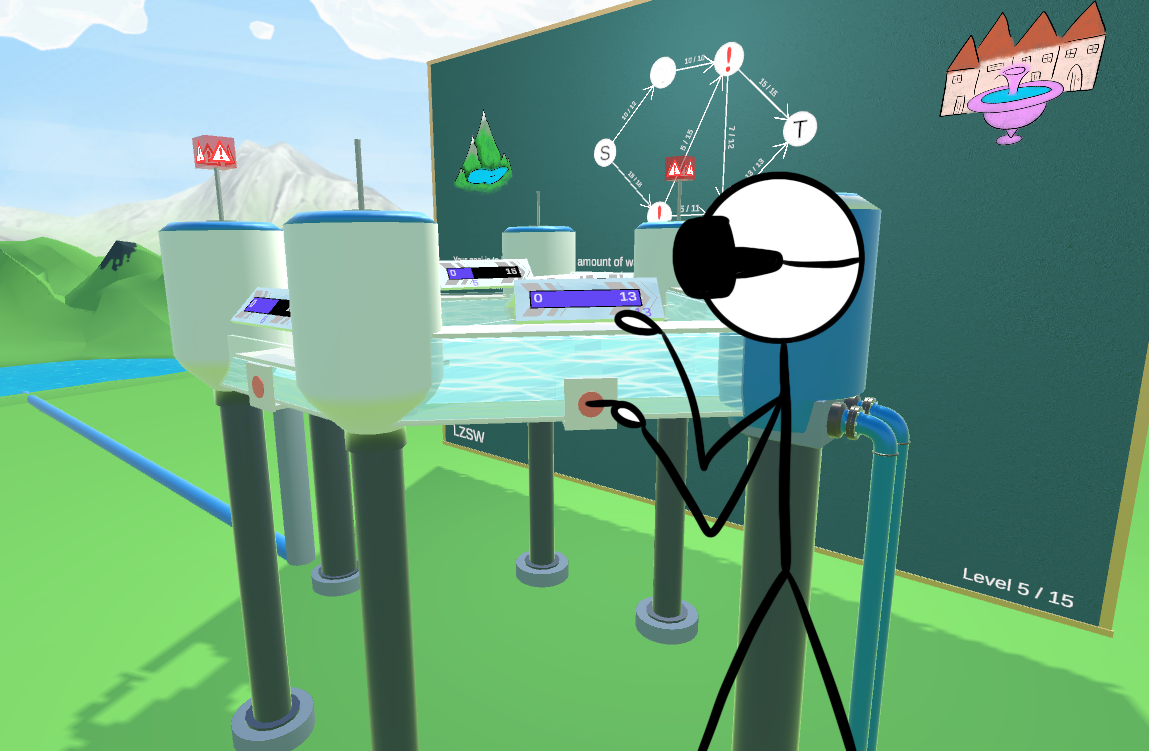
When we design for embodied learning, one goal is often to ground abstract concepts in concreteness. However, the notion of concreteness can be apprehended in various ways and it is not yet clear which specific aspects of concreteness help the learners. In this project, we compare different types of concreteness, focusing on the topic of graph theory.

embodied learning concreteness graph theory vr representations
Grasping derivatives in Virtual Reality

Grasping Derivatives in Virtual Reality

Julia Chatain, Virginia Ramp, Venera Gashaj, Violaine Fayolle, Manu Kapur, Robert W. Sumner, Stéphane Magnenat

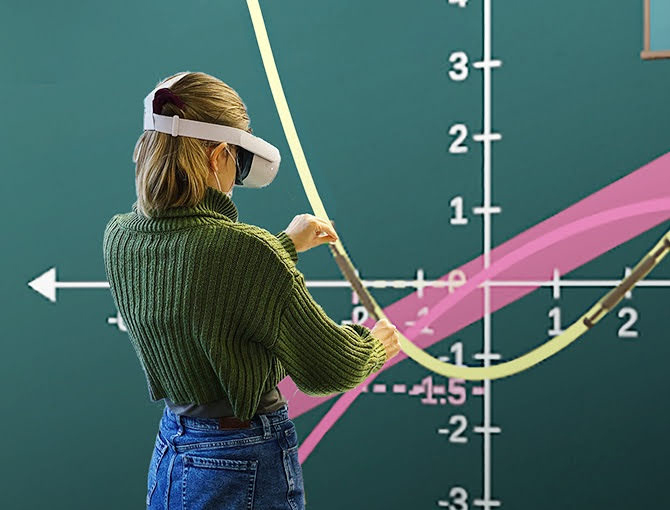
How should learners interact with mathematical object in VR? As we know that our bodies and movements are key to learning, the question of how to design interaction is crucial. Different interaction techniques may result in different bodily movement and thus impact learning differently. In this project, we compare different interaction designs for derivatives.

embodied learning direct-embodied enacted VR mathematics education
Digital Gloves: Palms as both input and display

Digital Gloves: Palms as Both Input and Display

Julia Chatain, Danielle Sisserman, Lea Reichardt, Martina Kessler, Violaine Fayolle, Robert W. Sumner, Manu Kapur, Fabio Zünd, Amit Bermano

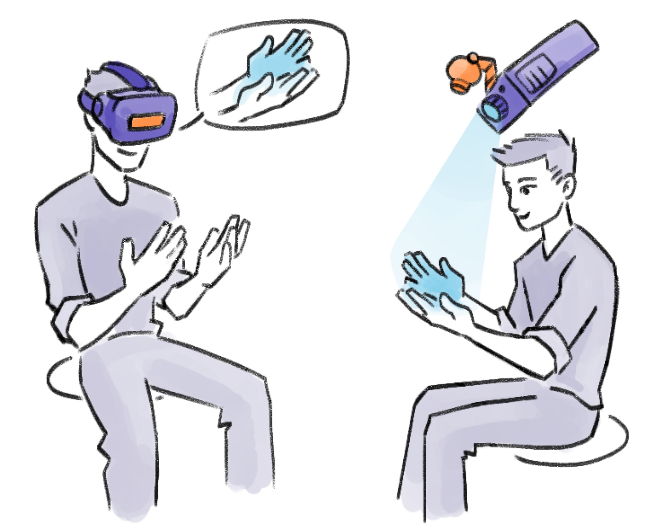
The shape and function of our human hands drastically impact how we interact with the world. In the digital age, our hands still represent our main form of interaction with content. However, current design only uses hands to interact with external objects. Here, we explore the benefits of leveraging hands both for input and display.

avatar embodiment interaction paradigm vr game design
Game Creator: Visual Programming for Creative Game Design

Game Creator: Visual Programming for Creative Game Design

Julia Chatain, Stéphane Magnenat, Olivier Bitter, Violaine Fayolle, Heynry Raymond, Robert W. Sumner

Creating a video game is a highly creative endeavor in nature, but often difficult to access for those who don't know how to program. We developped an app using visual programming for people of all ages to create their own video game, integrating their own artistic creations.

game design visual programming creativity interaction
FlyMap: Interacting with maps projected from a drone

FlyMap: Interacting with Maps Projected from a Drone

Anke Brock, Julia Chatain, Michelle Park, Tommy Fang, Martin Hachet, James Landay, Jessica Cauchard

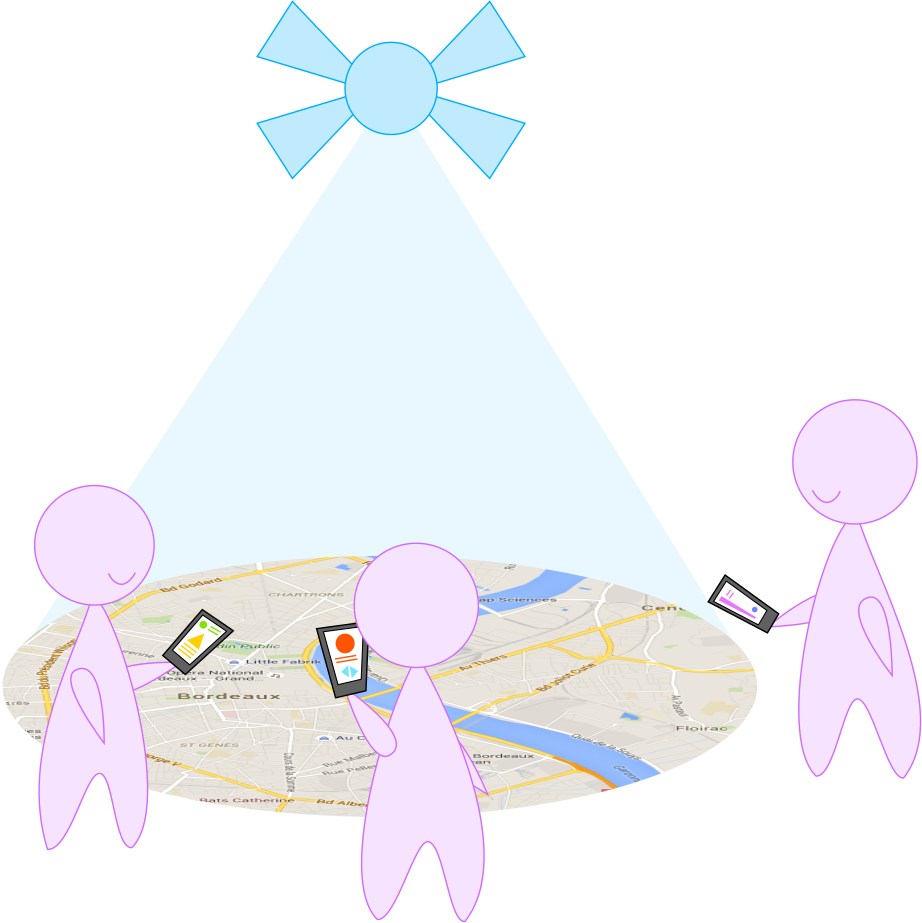
Interactive maps have become ubiquitous in our daily lives, helping us reach destinations and discovering our surroundings. As mobile devices evolve and become independent from users, such as with robots and drones, how will we interact with the maps they provide? We propose FlyMap as a novel user experience for drone based interactive maps.

drone navigation interaction spatial AR
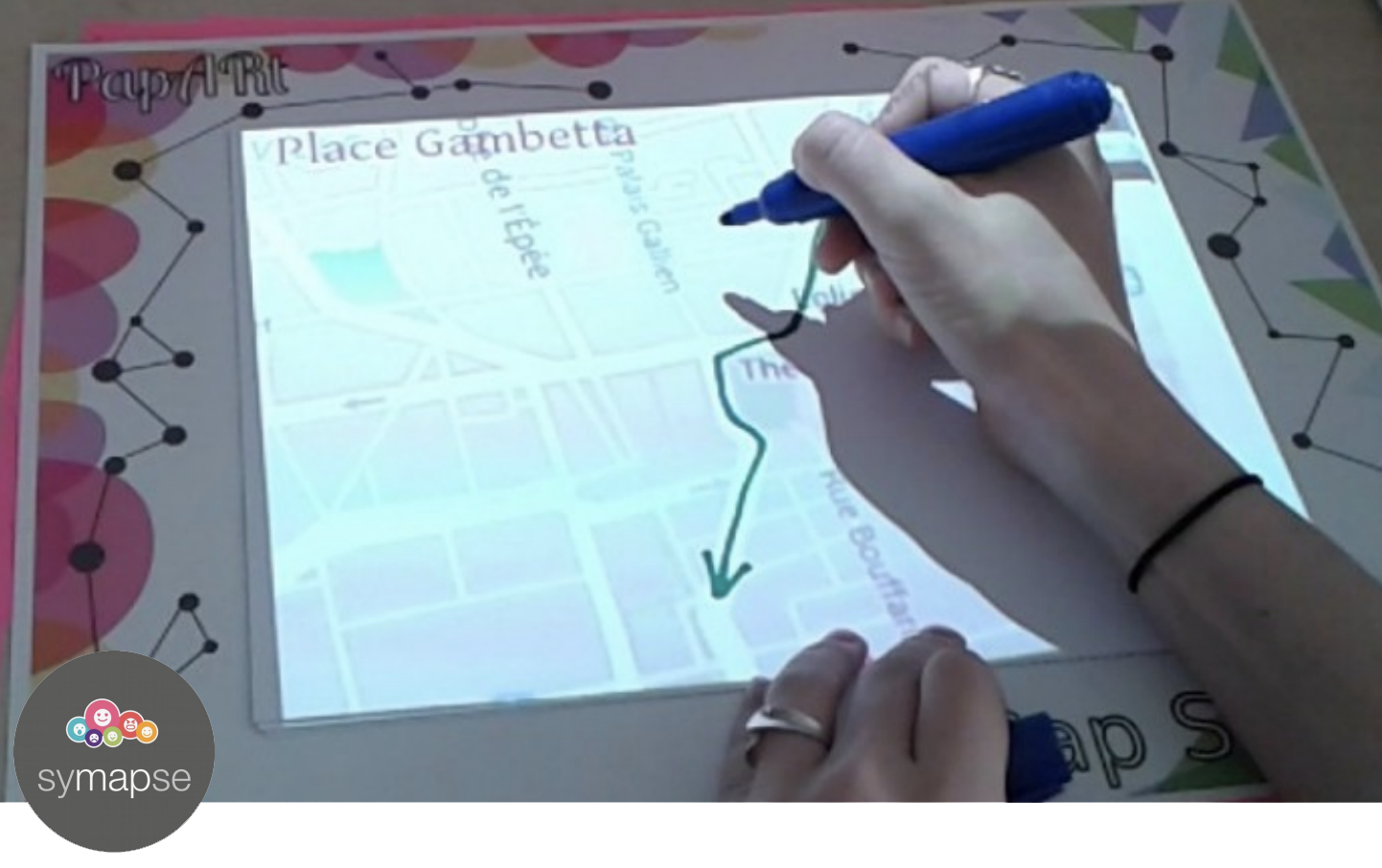
SyMAPse: Design and Evaluation of an Augmented Reality Map

SyMAPse: Design and Evaluation of an Augmented Reality Map

Julia Chatain, Oussama Azibou, Marie Demangeat, Anke Brock, Martin Hachet, Dee Laval, Pierre Dillenbourg

In a Smart City context, this project explores how we can use spatial augmented reality to help citizens express themselves about a city. Smart City approaches often focus on quantitative inputs from sensors and citizens. Here, we draw inspiration from subjective maps to provige information about the city that cannot be expressed with quantitative measurements.

navigation geographical data interaction spatial AR