
Contact

I am happy to chat or collaborate!

If you want to discuss projects, products, or simply academia things, feel free to reach out.

If you want to build longer collaborations, I also offer consulting services.

If you would like to work together, please check out my supervisor statement and the list of open projects on my team's website.

Open thesis opportunities

Filters

Embodied emotion regulation: Investigating the interplay between students’ emotion regulation and their bodily state/reactions during learning

Master Thesis

In this project, you would investigate the role of embodiment in emotion regulation, how it helps students during learning, and may design an intervention that helps learners effectively regulate their negative emotions through embodiment.

Preferred background: You like to co-design with humans, to prototype activities, and conduct rigorous evaluations.

Supervision: Prof. Dr. Julia Chatain (CHLX, UniDistance Suisse) and Prof. Dr. Tomohiro Nagashima (LaLa Lab, Saarland University)

Eligibility: Students from UniDistance Suisse or Saarland University, according to respective regulations.
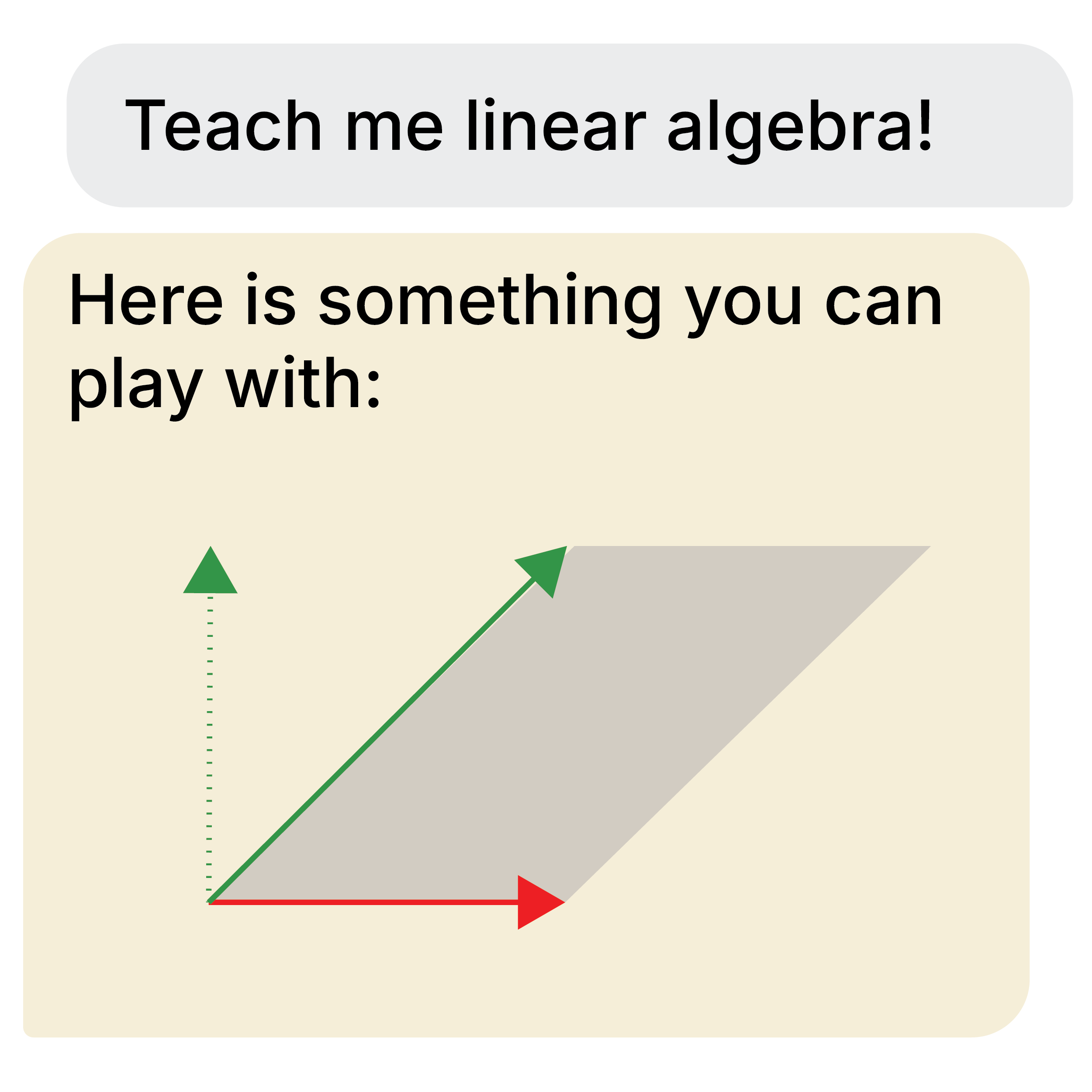

How can we use LLMs to generate interactive mathematical learning activities?

Master Thesis

In this project, you will develop a tool to generate meaningful and useful concrete examples for mathematics, for various age groups, spanning different types of concreteness in our taxonomy. If time allows, you will develop both a student-facing and a teacher-facing version of this tool.

Preferred background: You can design and code prototypes for interactive learning tools.

Supervision: Prof. Dr. Julia Chatain (CHLX, UniDistance Suisse) and Prof. Dr. Tomohiro Nagashima (LaLa Lab, Saarland University)

Eligibility: Students from UniDistance Suisse or Saarland University, according to respective regulations.
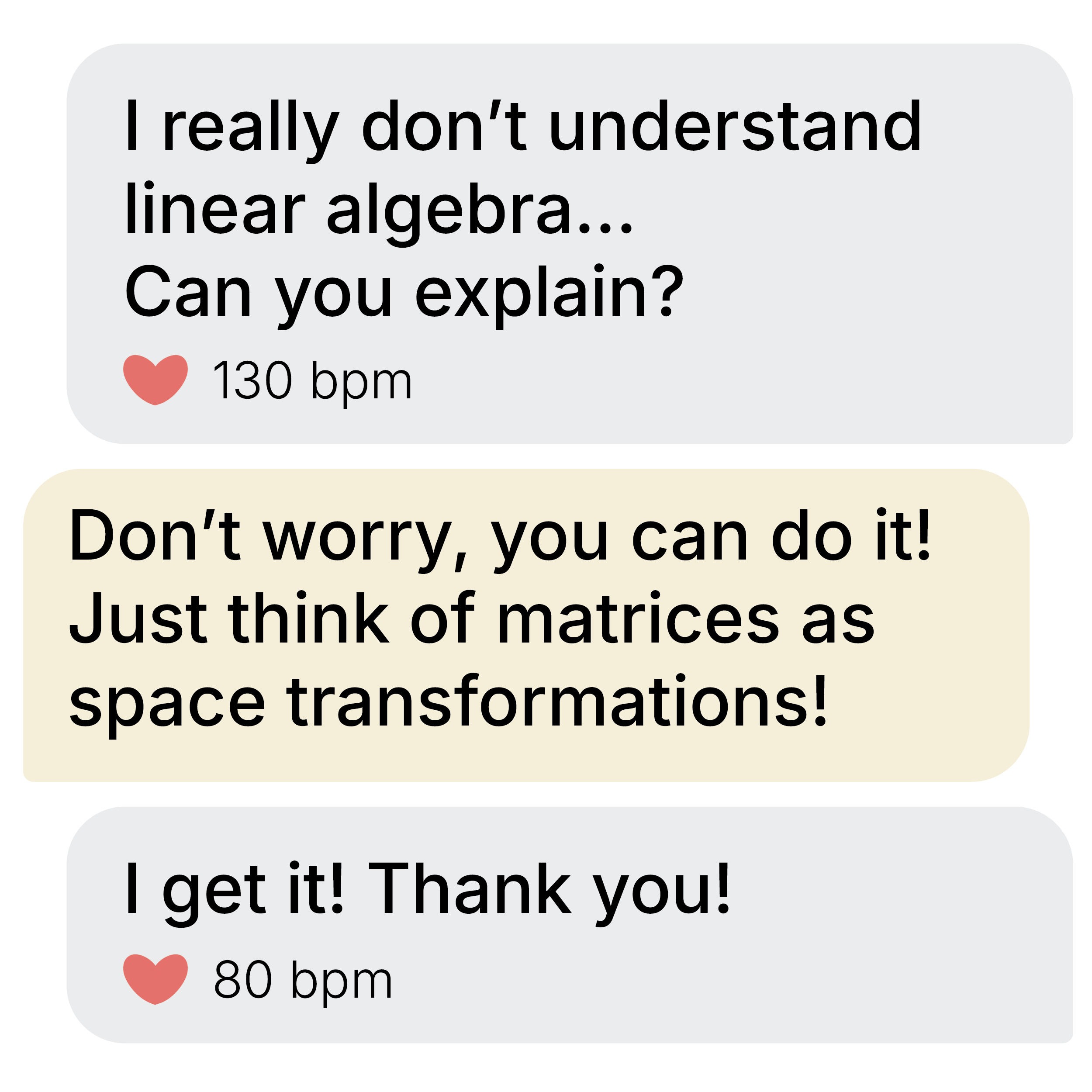
Do learners with math anxiety feel more comfortable participating in embodied learning activities?

Bachelor Thesis Master Thesis

In this project, we will develop or adjust three prototypes of non-technological embodied learning interventions for mathematics, using our design framework. You will then conduct a study with students to evaluate how math anxiety impacts willingness to participate in the embodied learning activity (using our questionnaire) and the behavior of the participants during the activity. You will reflect on these results based on your design choices.

Preferred background: You have a background in educational psychology, you love to design learning interventions and conduct rigorous studies with humans.

Supervision: Prof. Dr. Julia Chatain (CHLX, UniDistance Suisse) and Prof. Dr. Tomohiro Nagashima (LaLa Lab, Saarland University)

Eligibility: Students from UniDistance Suisse or Saarland University, according to respective regulations.
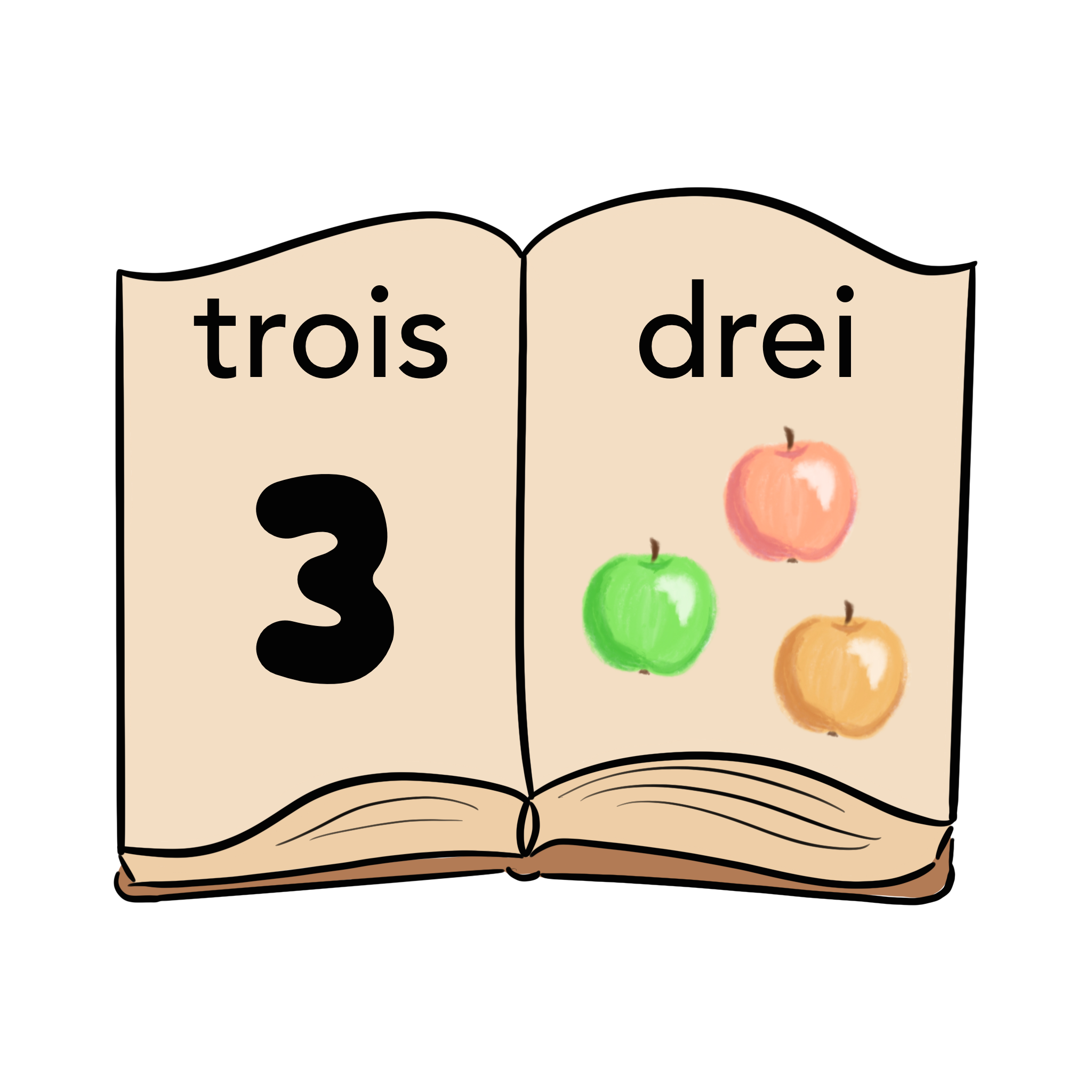
Emotionally-aware chatbot for students with math anxiety

Master Thesis

Students with math anxiety struggle to solve mathematical problems presented with symbols (e.g. x = 3). To support them, research has explored the potential of using more concrete representations, for example real world examples (e.g. 3 apples) or visual representations (e.g. 3 circles). However, it is still important to ensure these students can eventually transition from these concrete representations to more abstract ones and help them handle the emotional challenges they may face during this transition. In this project, you will develop an AI math tutor that uses physiological data to help math anxious students navigate the transition from concrete to abstract representations of mathematical concepts.

Preferred background: You know how to build LLM-powered learning tools and feel excited about co-designing and evaluating these tools with humans.

Supervision: Prof. Dr. Julia Chatain (CHLX, UniDistance Suisse) and Prof. Dr. April Yi Wang (PEACH Lab, ETH Zurich)

Eligibility: Students from UniDistance Suisse or ETH Zurich, according to respective regulations.
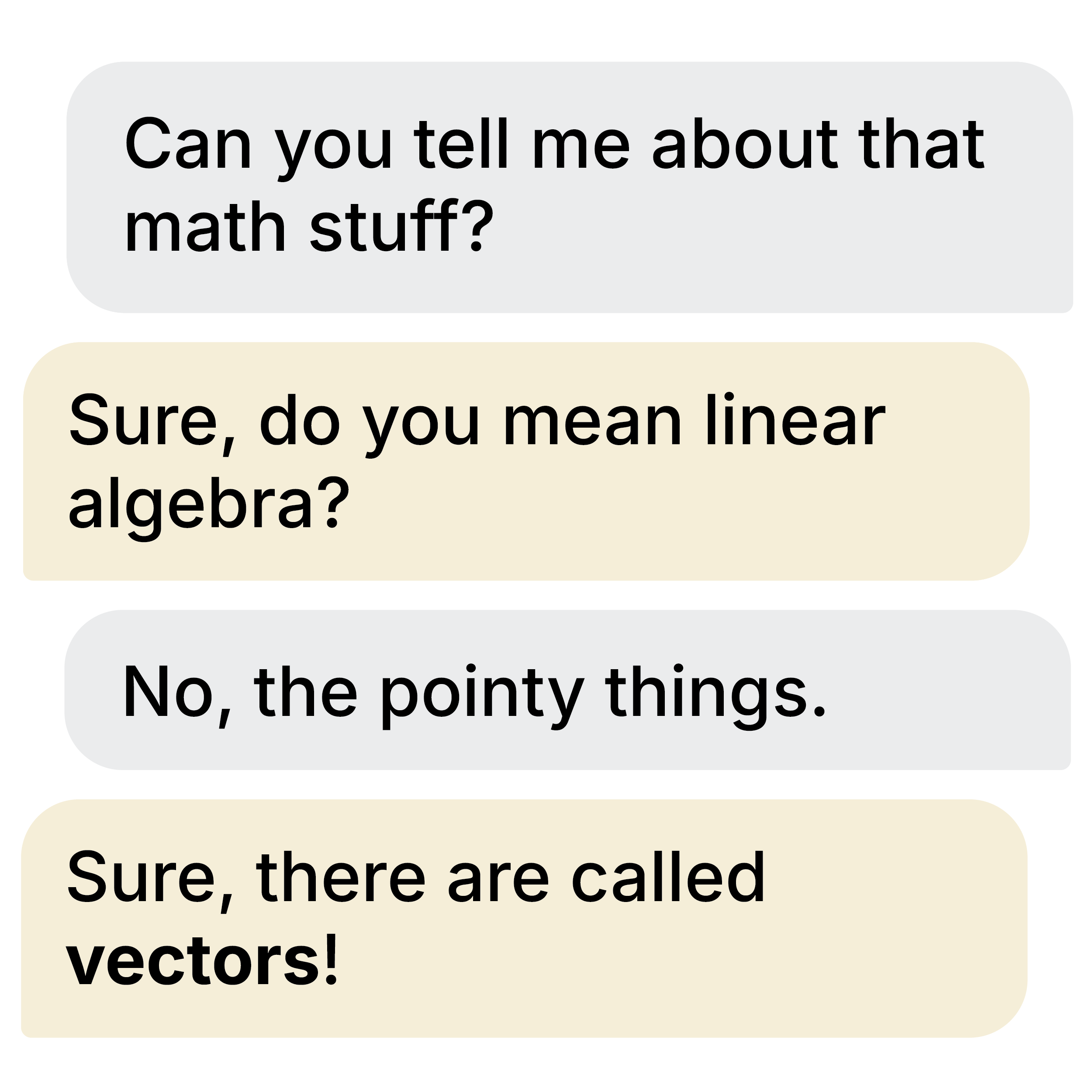
Do mathematics textbooks in the French-speaking side and in the German-speaking side of Switzerland use different types of concrete examples?

Bachelor Thesis Master Thesis

As mathematics is often perceived as abstract by students, concrete examples are used to facilitate the introduction of new topics. However, there are various types of concrete examples: real-work examples, familiar examples, informal examples, physical examples, and more. As these different examples impact learning differently, we are interested in identifying what kinds of concrete examples are included in math textbooks in Switzerland.

Preferred background: You understand mathematics quite well, are confident using both quantitative and qualitative methods, and are fluent in both German and French.

Supervision: Prof. Dr. Julia Chatain (CHLX, UniDistance Suisse) and Prof. Dr. Hippolyte Gros (Aix Marseille Université)

Eligibility: Students from UniDistance Suisse or Aix Marseille University, according to respective regulations.

Can multimodal models generate concrete representations that are useful for math education?

Bachelor Thesis Master Thesis

Large language models (LLMs) are increasingly used as tutoring tools in mathematics education, yet little is known about which kinds of mathematical representations they handle well and which they fail at. In this project, you will use our taxonomy of abstraction and concreteness in mathematics education to benchmark different LLMs on how well they can generate each type of concrete or abstract representations, and how to improve the results of these LLMs.

Preferred background: You have strong python skills (data processing, API calls, evaluation pipelines), are familiar with NLP or ML concepts (prior coursework or project experience), and are interested in learning more about cognitive sciences and learning sciences.

Supervision: Prof. Dr. Julia Chatain (CHLX, UniDistance Suisse) and Dr. Anna Sotnikova (EPFL) and Prof. Dr. April Yi Wang (PEACH Lab, ETH Zurich)

Eligibility: Students from UniDistance Suisse, EPFL, or ETH, according to respective regulations.

What is the role of vagueness in how we interact with LLMs and how does this impact our learning?

Bachelor Thesis Master Thesis

LLMs allow us to be vague: While context matters in how we prompt LLMs, we can still use vague vocabulary and ill-formed sentences, and receive expected results nevertheless. This is robbing us of the opportunity of precising our thoughts and questions, an important part of learning. In this project, you will first evaluate whether humans are indeed more vague when interacting with LLMs. Second, you will evaluate how this vagueness impacts learning.

Preferred background: You are interested in linguistics, comfortable with mathematics, and are interested in conducting rigorous user studies using both quantitative and qualitative data.

Supervision: Prof. Dr. Julia Chatain (CHLX, UniDistance Suisse) and Prof. Dr. Yoolim Kim (Carleton College)

Eligibility: Students from UniDistance Suisse according to regulations.

Open positions

For all our open positions, visit the UniDistance website.